

Most meeting planners still measure event success by attendance. But that’s not the most accurate scoreboard.
A full room and a long list of badge scans feel like success. But without a plan for qualifying, capturing, and following up on those contacts, most of that list will never turn into a conversation, let alone a customer. The opportunity is there. The challenge is building a process that actually captures it.
We put together this guide to break down how to generate, qualify, and follow up on event leads—for organizers building the framework and exhibitors working within it.
What Is Event Lead Generation?
Event lead generation is the process of attracting relevant prospects, collecting their information, understanding their interests, and moving qualified contacts toward a business relationship.
Here’s the part that’s easy to skip: a registration, a badge scan, or a business card is not automatically a lead. It’s just confirmation that someone showed up. It doesn’t tell you whether they have a real need, a budget, or the authority to buy. Treating every attendee as a lead is one of the most common reasons why event ROI looks disappointing on paper. The volume was there, but the qualification step never happened.
Why Events Are Worth the Investment
Networking works because it puts the right people in the same room. Lead generation works the same way: events create direct interaction, live demos, and real conversations that most digital channels simply can’t replicate.
The data backs this up: executive-focused events convert to marketing-qualified leads at roughly 54%, well above the 31% average across all channels. That’s a strong number. But it only holds if the fundamentals are in place:
- The right audience actually showed up.
- Lead generation was designed into the event, not bolted on afterward.
- Data collection captures context, not just contact details.
- Everyone agrees on what “qualified” means.
- Someone is actually following up.
One more thing worth keeping in mind: events also carry the highest cost per lead of any channel, often $811–$881. But that’s not a reason to skip events, it’s a reason to take qualification seriously. A lead that expensive deserves more than a spreadsheet nobody opens again.
Start Before the Event Opens
The organizers who get this right aren’t necessarily running the most aggressive campaigns, they’re the ones who’ve made a few key decisions early.
1. Set Objectives and KPIs
Before you even launch a single campaign, sit down with your sales team and agree on what you’re actually optimizing for: qualified leads, meetings booked, pipeline influenced, cost per lead, or revenue. Pick your metrics before the data starts rolling in, not after.
2. Define the Ideal Lead
Get specific: relevant industries, job roles, company sizes, needs, and buying stage. And don’t skip the disqualification criteria. Knowing who isn’t a fit also saves your sales team hours chasing contacts who were never going to convert.
3. Align Marketing, Event, and Sales Teams
Assign clear ownership for promotion, onsite data capture, qualification, and follow-up. This step is where most leads quietly disappear, not because the data wasn’t collected, but because nobody was clearly responsible for what happened next.
Pre-Event: Attract the Right Audience
A few tactics that consistently help before doors open:
- Targeted registration campaigns aimed at your ideal lead profile.
- Account-based invitations for named target companies.
- Speaker and partner co-promotion.
- Preview webinars or educational content that surface early intent.
- Meeting-booking campaigns for on-site scheduling.
- Segmented email sequences and retargeting.
- Registration-form questions that capture role or need.
One rule of thumb: only ask for information you’ll actually use. Every extra form field adds friction, and friction costs you registrations. If lifting sign-ups is your real bottleneck, our guide on how to increase event registration walks through the mechanics in more detail.
During the Event: Keep It Meaningful
The goal onsite isn’t maximum contact volume, it’s meaningful interaction.
- Lean on the sessions that create real conversations: Demos, workshops, one-on-one consultations, and structured networking all generate stronger signals when they’re tied to genuine audience needs. Our networking tips for your next conference cover formats that spark exactly these kinds of conversations.
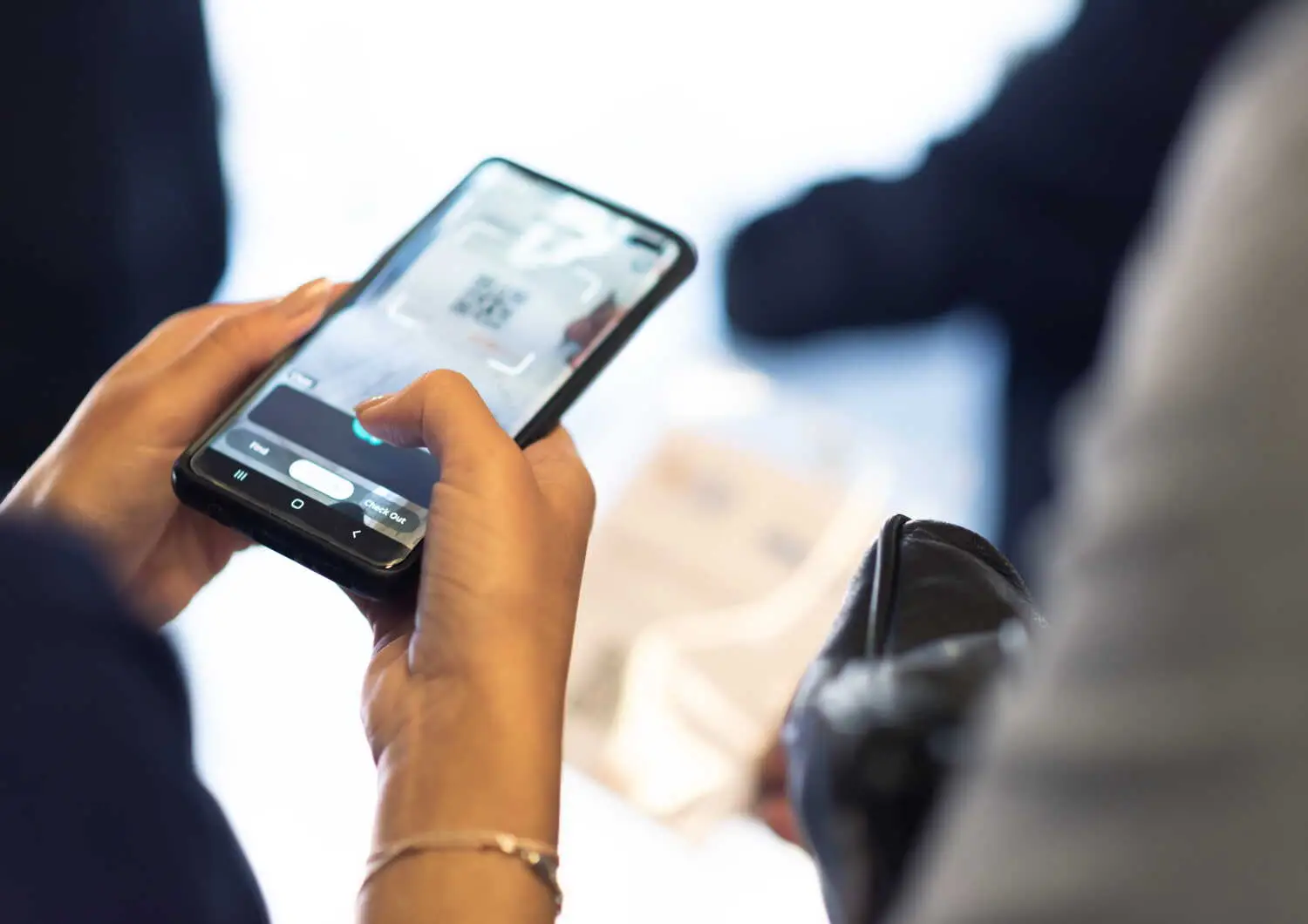
- Capture data the same way, every time: Badge scans, QR codes, digital forms, your event app, meeting tools, exhibitor lead-retrieval,…Whatever you choose, use it consistently across every team and booth. Mixing methods across a single event is one of the fastest ways to end up with fragmented, unusable data.
- Write down the context while it’s fresh: Interests, challenges, urgency, purchasing role, requested follow-up—a name and email address tells you almost nothing on its own. A quick note taken in the moment is worth more than any amount of data clean-up later.
After the Event: Follow Up Like It Matters
Speed only helps if the message is relevant and lands with the right person. A fast, generic email barely beats a slow one.
- Segment and score what you collected: Separate high-priority prospects, sales-ready leads, existing customers, and non-fits by combining explicit data (form answers and meeting notes) with behavioral data (such as attendance, content views, meetings booked, etc.).
- Personalize the follow-up: Reference the session someone attended, the question they asked, or the resource they requested. It’s a small effort that makes a noticeable difference in response rates.
- Build a real handoff: Fill out owner, priority, next action, deadline, supporting notes, and CRM status for every qualified lead. Leads that aren’t sales-ready yet shouldn’t just disappear; they should move into a structured nurture track instead.
A Few Ideas by Stage
Lead generation doesn’t look the same at every stage, so here are a few ways to get the most out of each one—before, during, and after your meeting:
- Before: invitation-only sessions, self-assessment tools, expert interviews, referral programs, pre-booked consultations.
- During: live demos, interactive workshops, short surveys, gated content, AI-assisted networking matches, expert clinics.
- After: personalized recaps, selectively shared recordings, follow-up webinars, matched case studies, topic-based nurture sequences.
What This Looks Like in Practice
Picture a medical association running its annual scientific congress. The target audience is clinicians in a specific specialty, plus industry sponsors looking for scientific engagement.
Before the event, the association runs segmented invitations and an abstract-submission funnel that also doubles as an early intent signal. Onsite, exhibitor demo stations use lead-retrieval scanning alongside sub-specialty roundtables and in-app session tracking. Attendance, exhibitor interactions, and survey responses get scored against each sponsor’s target profile. Within 48 hours, sponsors receive segmented lists, and engaged non-members are routed into a membership nurture track. Success then gets measured in qualified leads per sponsor, meetings booked, membership conversions, and time-to-follow-up.
Nothing here is complicated. It’s just deliberate.
Where Event Technology Fits In
Connected event technology supports nearly every stage of this process: registration and segmentation, meeting scheduling, engagement tracking, onsite lead capture, exhibitor workflows, and reporting.
At CTI, this is exactly the kind of connection we build for, so your lead data doesn’t need to be manually reassembled from five different tools after the event ends. Explore how our all-in-one platform can support your meeting needs.
How to Know If It’s Actually Working
Track these categories separately, don’t just collapse them into one blended number:
- Volume: registrations from target accounts, total qualified leads.
- Quality: fit with your ideal profile, data completeness.
- Engagement: meetings booked, session attendance, downloads.
- Conversion: lead-to-opportunity rate, follow-up response rate.
One thing that’s worth taking into account as well: time-to-follow-up. It’s one of the clearest predictors of whether a lead actually converts. And if you’re feeding a complex, multi-stakeholder sales cycle, give it some time before you judge it. Measuring too early tends to undervalue what the event actually delivered.
A Few Common Pitfalls to Avoid
- Treating every attendee as a lead instead of segmenting by relevance.
- Targeting too broad an audience, which only inflates volume and dilutes quality.
- Collecting data with no follow-up plan already in place.
- Using different capture methods across teams and booths.
- Letting qualified leads sit before handing them to sales.
- Sending the same generic message to everyone on the list.
- Measuring badge scans instead of lead quality.
- Running event and CRM data as two disconnected systems.
- Treating privacy and consent as an afterthought instead of building it in from the start.
The truth is, most leads don’t disappear because the event was bad—they disappear because no one took the next step.
Wrapping Up
Event lead generation works when it’s treated as a process, and not as a result of attendance: defined objectives, a clear picture of your ideal lead, consistent on-site capture, real context, and a fast, personalized handoff to sales. Registrations and badge scans are inputs. They were never the outcome.
At CTI, we help scientific and medical organizations connect registration, engagement, and lead data into a single workflow, so your team spends less time reassembling spreadsheets and more time following up with the leads that actually matter.
Curious how this could work for your next event? Book a demo with our team and see how we turn conference interaction into measurable pipeline.
FAQ
Attracting relevant prospects at conferences, capturing their details and context, and moving qualified contacts toward a business relationship—not simply collecting registrations or badge scans.
Through high-intent interactions (such as demos, workshops, meetings, and networking) that produce stronger signals than most digital channels, provided the audience is relevant and follow-up actually happens.
With one consistent method across every team: badge scans, QR codes, digital forms, app engagement, meeting tools, and lead-retrieval devices. Always paired with qualification notes.
By combining explicit data (form answers, meeting notes) with behavioral data (sessions attended, content viewed) against your ideal-lead profile, then sorting into priority tiers.
Within 24–72 hours where possible. Speed without correct routing and personalization doesn’t add much value on its own.
Track volume, quality, engagement, conversion, and revenue as separate metrics, and give complex B2B sales cycles extra time before drawing conclusions about attribution.